Table of Contents / جدول المحتويات
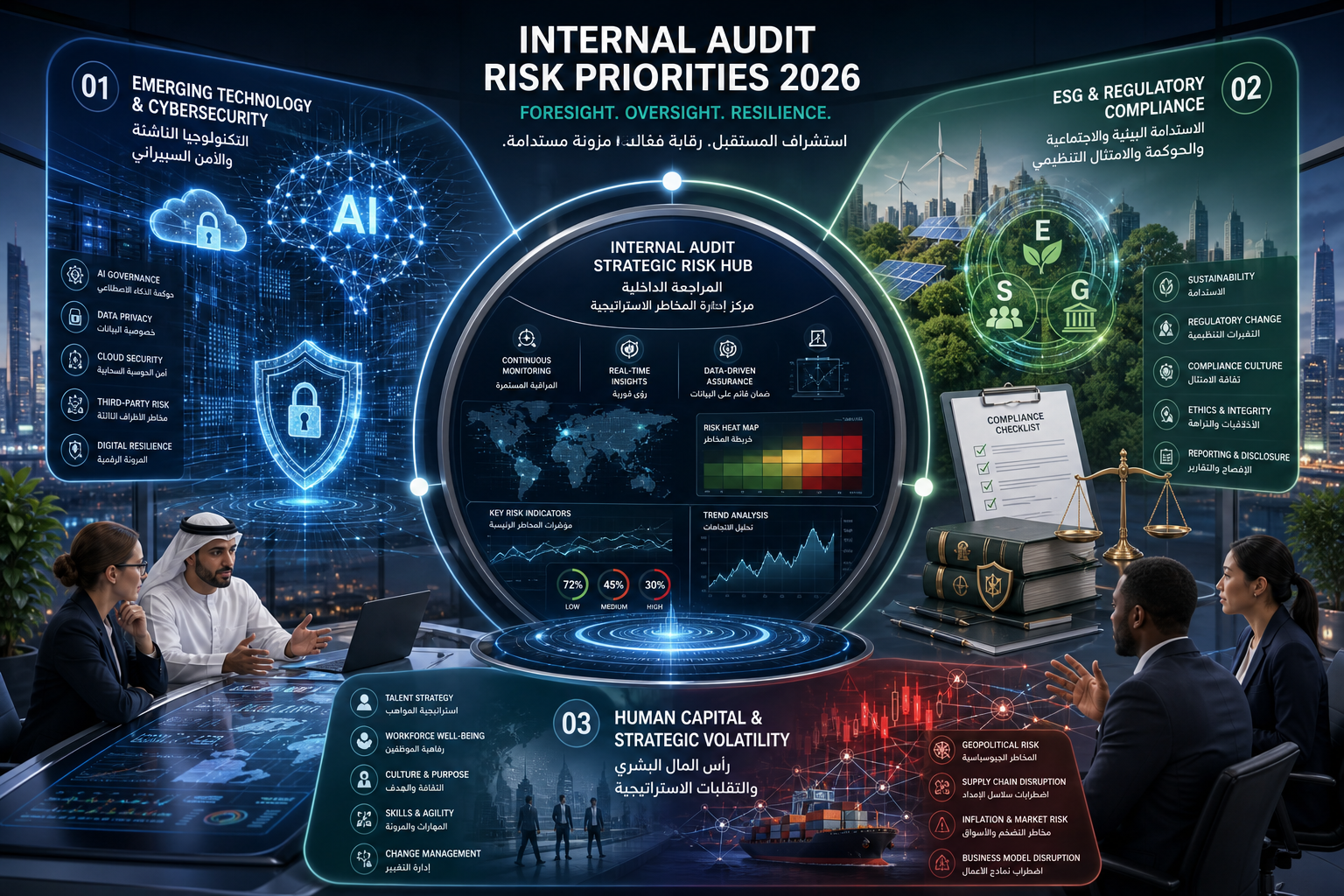
As organizations approach the mid-point of the decade, the Top Risk Areas for Internal Audit Across Industries in 2026 are becoming increasingly complex. Rapid technological advancements and shifting geopolitical landscapes are forcing audit committees to rethink their priorities. This forward-looking perspective is essential for maintaining organizational resilience.
Emerging Technology and Cybersecurity
Technological disruption remains at the forefront of the Top Risk Areas for Internal Audit Across Industries in 2026. Artificial Intelligence (AI) and machine learning are no longer just tools but core components of business operations. Auditors must now evaluate the ethical use of AI and the integrity of the data powering these systems.
Cybersecurity threats are also evolving, with ransomware and sophisticated social engineering becoming more prevalent. Internal audit teams need to shift from periodic testing to continuous monitoring of digital perimeters. Ensuring that third-party vendors adhere to strict security protocols is a critical aspect of this domain.
Data privacy regulations continue to tighten globally, requiring deeper dives into how consumer information is stored and processed. Audit programs must reflect these changes to avoid significant legal and reputational damage. For more specialized tools, visit our internal audit resources page.
ESG Integration and Regulatory Compliance
Environmental, Social, and Governance (ESG) reporting is transitioning from voluntary disclosure to a mandatory regulatory requirement. This shift represents one of the Top Risk Areas for Internal Audit Across Industries in 2026. Organizations must provide verified data regarding their carbon footprint and supply chain ethics.
Regulators are increasingly focusing on ‘greenwashing’ and the accuracy of sustainability claims. Internal auditors play a vital role in providing assurance that ESG data is reliable and consistent with financial reporting. This requires a collaborative effort between environmental specialists and financial audit teams.
Beyond ESG, the global compliance landscape is becoming more fragmented, with regional laws often conflicting. Staying ahead of these changes requires a robust regulatory intelligence framework. You can find detailed industry perspectives on Crowe LLP’s recent reports regarding these shifts.
Human Capital and Strategic Volatility
The ‘war for talent’ and the changing nature of work continue to be Top Risk Areas for Internal Audit Across Industries in 2026. High turnover rates and skill gaps can undermine even the most robust internal controls. Auditors are now looking at corporate culture and employee well-being as leading indicators of operational risk.
Economic volatility, driven by inflation and supply chain disruptions, requires agile strategic planning. Internal audit must assess whether management’s responses to these challenges are appropriate and timely. Stress testing financial assumptions and operational capacity is now a standard part of the audit mandate.
Effective risk management in 2026 will require a multidisciplinary approach that moves beyond traditional financial checks. Organizations must foster a culture of transparency and accountability at every level. For additional context, consult the Institute of Internal Auditors for global standards updates.
Why This Matters for Audit Professionals
Understanding the Top Risk Areas for Internal Audit Across Industries in 2026 is not just about compliance; it is about strategic partnership. Audit professionals who can navigate these complexities will provide immense value to their organizations. Staying proactive is the only way to safeguard assets and ensure long-term growth.
النسخة العربية
مع اقتراب المؤسسات من منتصف العقد، أصبحت أهم مجالات المخاطر للمراجعة الداخلية عبر الصناعات في عام 2026 تزداد تعقيداً. تجبر التطورات التكنولوجية المتسارعة والمناظر الجيوسياسية المتغيرة لجان المراجعة على إعادة التفكير في أولوياتها. هذا المنظور الاستشرافي ضروري للحفاظ على مرونة المؤسسة.
التكنولوجيا الناشئة والأمن السيبراني
لا يزال الاضطراب التكنولوجي في طليعة أهم مجالات المخاطر للمراجعة الداخلية عبر الصناعات في عام 2026. لم يعد الذكاء الاصطناعي وتعلم الآلة مجرد أدوات بل مكونات أساسية لعمليات الأعمال. يجب على المراجعين الآن تقييم الاستخدام الأخلاقي للذكاء الاصطناعي وسلامة البيانات التي تشغل هذه الأنظمة.
تتطور تهديدات الأمن السيبراني أيضاً، حيث أصبحت برامج الفدية والهندسة الاجتماعية المتطورة أكثر انتشاراً. تحتاج فرق المراجعة الداخلية إلى الانتقال من الاختبار الدوري إلى المراقبة المستمرة للمحيط الرقمي. يعد ضمان التزام الموردين الخارجيين ببروتوكولات أمنية صارمة جانباً حاسماً في هذا المجال.
تستمر لوائح خصوصية البيانات في التشديد عالمياً، مما يتطلب غوصاً أعمق في كيفية تخزين ومعالجة معلومات المستهلكين. يجب أن تعكس برامج المراجعة هذه التغييرات لتجنب الأضرار القانونية وسمعة المؤسسة الكبيرة. للحصول على أدوات أكثر تخصصاً، قم بزيارة صفحة موارد المراجعة الداخلية الخاصة بنا.
تكامل المعايير البيئية والاجتماعية والحوكمة والامتثال التنظيمي
تنتقل تقارير المعايير البيئية والاجتماعية والحوكمة (ESG) من الإفصاح الطوعي إلى المتطلبات التنظيمية الإلزامية. يمثل هذا التحول أحد أهم مجالات المخاطر للمراجعة الداخلية عبر الصناعات في عام 2026. يجب على المؤسسات تقديم بيانات موثقة فيما يتعلق ببصمتها الكربونية وأخلاقيات سلسلة التوريد.
يركز المنظمون بشكل متزايد على “الغسل الأخضر” ودقة ادعاءات الاستدامة. يلعب المراجعون الداخليون دوراً حيوياً في تقديم التأكيد على أن بيانات ESG موثوقة ومتسقة مع التقارير المالية. يتطلب ذلك جهداً تعاونياً بين المتخصصين البيئيين وفرق المراجعة المالية.
بعيداً عن ESG، أصبح مشهد الامتثال العالمي أكثر تفتتاً، مع تعارض القوانين الإقليمية غالباً. يتطلب البقاء في طليعة هذه التغييرات إطاراً قوياً للاستخبارات التنظيمية. يمكن العثور على أهم مجالات المخاطر للمراجعة الداخلية عبر الصناعات في عام 2026 بالتفصيل في تقارير الصناعة الحديثة.
رأس المال البشري والتقلب الاستراتيجي
تستمر “الحرب على المواهب” والطبيعة المتغيرة للعمل في كونها من أهم مجالات المخاطر للمراجعة الداخلية عبر الصناعات في عام 2026. يمكن أن تؤدي معدلات الدوران العالية وفجوات المهارات إلى تقويض حتى أقوى الضوابط الداخلية. ينظر المراجعون الآن إلى الثقافة المؤسسية ورفاهية الموظفين كمؤشرات رائدة للمخاطر التشغيلية.
يتطلب التقلب الاقتصادي، مدفوعاً بالتضخم واضطرابات سلسلة التوريد، تخطيطاً استراتيجياً مرناً. يجب على المراجعة الداخلية تقييم ما إذا كانت استجابات الإدارة لهذه التحديات مناسبة وفي الوقت المناسب. يعد اختبار الإجهاد للافتراضات المالية والقدرة التشغيلية الآن جزءاً قياسياً من تفويض المراجعة.
تتطلب إدارة المخاطر الفعالة في عام 2026 نهجاً متعدد التخصصات يتجاوز الفحوصات المالية التقليدية. يجب على المؤسسات تعزيز ثقافة الشفافية والمساءلة على كل المستويات لضمان دقة تنفيذ أهم مجالات المخاطر للمراجعة الداخلية عبر الصناعات في عام 2026 بشكل سليم.
لماذا يهم هذا متخصصي المراجعة الداخلية
إن فهم أهم مجالات المخاطر للمراجعة الداخلية عبر الصناعات في عام 2026 لا يتعلق فقط بالامتثال؛ بل يتعلق بالشراكة الاستراتيجية. سيوفر متخصصو المراجعة الذين يمكنهم التنقل في هذه التعقيدات قيمة هائلة لمؤسساتهم. البقاء استباقياً هو السبيل الوحيد لحماية الأصول وضمان النمو على المدى الطويل.