Introduction
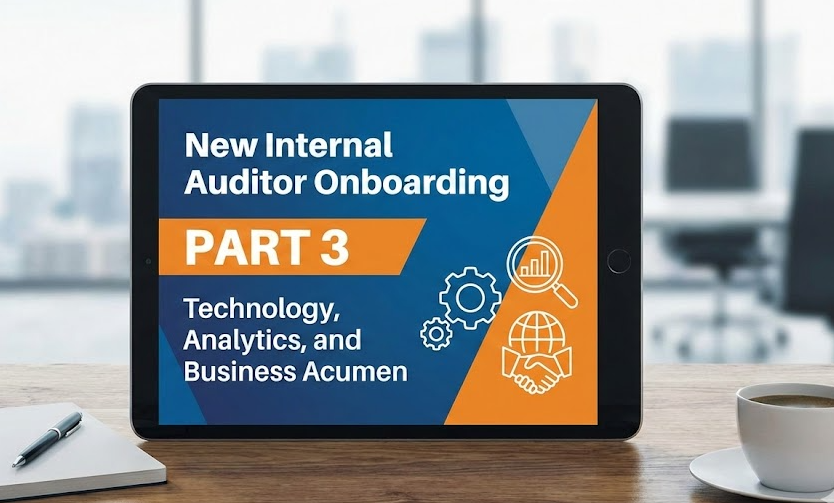
Inventory shrinkage—mismatches between recorded and actual stock—creates financial leakage and erodes stakeholder trust. For new internal auditors, understanding the technical and business dimensions of such problems is essential. The course "New Internal Auditor Onboarding – Part 3 IT, Data Analytics, and Business Knowledge for Internal Auditors" provides targeted explanations, real-world examples, and practice questions to help auditors tackle these issues. This article focuses on one specific problem the course helps professionals understand: diagnosing inventory shrinkage using IT controls, data analytics, and business process knowledge.
Why inventory shrinkage is a multifaceted problem
Shrinkage can result from theft, recording errors, timing differences, supplier issues, or system integration failures. A successful investigation requires more than counting stock: it requires combining IT control testing, data analytics techniques, and an understanding of operational workflows. This is where the content in the onboarding package becomes practical: it bridges technical and business perspectives so auditors can form evidence-based conclusions.
IT controls to consider
Start by assessing the information systems that support inventory management. Key control points include access management, transaction logging, interfaces between point-of-sale (POS) and inventory systems, and batch processing routines. Practical checks include:
- Reviewing user access lists for segregation of duties conflicts (e.g., same user can adjust inventory and approve receipts).
- Confirming that transaction logs are enabled and retained for a sufficient period to support investigations.
- Testing reconciliations between POS, warehouse management, and general ledger systems to identify interface failures.
Data analytics techniques that reveal patterns
Data analytics can transform voluminous transactional records into actionable insights. Useful techniques include:
- Time-series analysis to spot sudden changes in shrinkage rates by location or product category.
- Benford's Law or outlier detection to identify abnormal adjustment transactions.
- Sequence analysis to detect unusual patterns of stock adjustments following specific users or terminals.
Hands-on practice with sample datasets and worked solutions—one of the features highlighted in the course package—helps auditors apply these techniques confidently.
Business knowledge: context matters
Understanding the operational environment is vital. For example, seasonal promotions, supplier lead-time changes, or new product launches can all cause apparent shrinkage spikes that are actually explainable business phenomena. When auditors combine process walkthroughs with data results, they can separate legitimate anomalies from control failures.
Hypothetical work example
Scenario: A retail chain reports a 2% increase in shrinkage at three stores over the last quarter. An auditor follows these steps:
- Gather system artifacts: POS logs, inventory adjustments, receiving records, and user access lists for the affected stores.
- Run analytics: compare shrinkage rates by SKU and time of day; identify if adjustments cluster with specific user IDs or terminals.
- Test IT controls: check whether automatic reconciliations between POS and inventory failed during the quarter and whether batch jobs ran on schedule.
- Perform business walkthroughs: interview store managers about recent promotions, staffing changes, or supplier issues during the period.
Findings: Analytics show that most adjustments occurred during the midnight to 2 a.m. window and were initiated by a small set of user accounts. IT testing reveals that a scheduled reconciliation job failed three times that quarter. Walkthroughs disclose that a temporary night-shift staffing agency had access credentials shared among workers.
Conclusion: The increase in shrinkage is likely due to weak access control practices, a failed reconciliation routine, and temporary staffing arrangements—not necessarily supplier or product issues. Recommended actions include enforcing unique user credentials, resolving the reconciliation job failures, and introducing exception monitoring for late-night adjustments.
Actionable takeaways for new auditors
- Integrate IT control testing with analytics results: don’t treat system checks and data analysis as separate tasks.
- Prioritise high-risk time windows and user accounts when analyzing transactional data to focus limited audit time effectively.
- Document business context during field interviews to avoid misclassifying legitimate operational changes as control failures.
- Use reproducible analytics workflows and preserve raw extracts to support audit evidence and reproducibility.
Practical next steps
If you are preparing for internal audit work on inventory or related processes, consider these immediate actions:
- Create a checklist that combines IT controls, data sources, and business questions for inventory-related audits.
- Practice analytics on anonymised datasets; try basic outlier detection and time-series comparisons to build confidence.
- Arrange short walkthroughs with operations staff early in the engagement to capture context before drawing conclusions.
- Expand your toolkit with focused learning resources—if you want a structured package that covers IT, analytics, and business knowledge, see the onboarding resource here: New Internal Auditor Onboarding – Part 3.
Combining IT control awareness, data analytics techniques, and solid business understanding turns inventory shrinkage investigations from guesswork into structured, evidence-based exercises. New internal auditors who build these skills can provide clearer findings and more practical recommendations to their organisations.
Next step: View the course details and start learning.